
The primary resource on the internet is a website or specialized web application that runs through a browser. Users may interact with different browser types and versions, but accurate and fast display of the web resource is required in all cases. To understand the compatibility of parameters, we recommend running extratester.click.
The Concept of Cross-Browser Testing
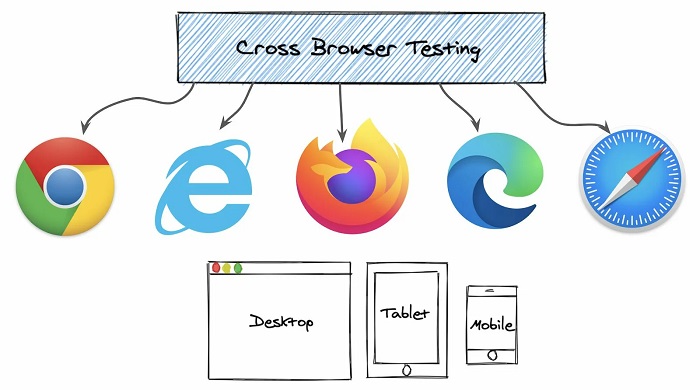
The term itself refers to studying how accurately and quickly websites and web applications operate in all browser types and on various platforms. This applies to desktop and mobile versions.
The procedures used in such activities include:
- Planning, which first determines the browser versions and types to be tested, and creates process scenarios that include all user actions, from opening a page to any complex commands.
- The testing environment is configured, meaning real browsers or their emulators are selected, and the parameters to be tested are determined.
- The procedure itself not only checks the compatibility of the web resource with a specific browser but also allows for the display of interface elements and the operation of interactive functions. As a result of testing, all issues that arise are noted, their causes are investigated, and recommendations for corrective actions are developed.
If changes have been made, retesting is mandatory.
Process Summary
The main goal is to identify incompatibilities with different browser types, which arise due to differences in the processing of HTML, CSS, and JavaScript. This may manifest itself in the following ways:
- Visual elements such as fonts and colors will differ, and the site structure itself will not display correctly on the screen.
- Functional errors such as non-functioning buttons, animation elements, and video playback will appear.
- Performance issues will arise, primarily with the site’s loading speed in the browser.
- Incompatibility with older browser versions will also appear.
- Cross-browser testing can address all these issues or shortcomings during the development stage of a web resource, before it is launched and hosted.
Testing helps avoid problems, reduced site traffic, user dissatisfaction, and reputational damage. Such actions are mandatory for new or improved resources.